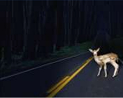
A Timely Reminder: Nighttime Driving Risks
As the seasons change and daylight hours shorten, both you and your teen may find yourselves driving more often after dark. It’s important to recognize that nighttime driving carries significantly greater risks—traffic fatality rates are nearly three times higher at night than during the day.
Why? Reduced visibility affects everyone on the road. As the sun sets, depth perception, color recognition, peripheral vision, and the ability to judge speed all decline. These impairments make it harder to react quickly and safely, especially for newer drivers.
To address this, most states have implemented laws that restrict the hours during which teen drivers can be on the road. These curfews are designed to protect young drivers by minimizing exposure to high-risk conditions while they build experience and confidence behind the wheel.
Michigan Law
- While holding a Level 2 License you may not operate a vehicle between 10 p.m. and 5 a.m unless:
- Accompanied by a licensed driver age 21 years or older.
- Driving to or from a job, or in the course of the job.
- Driving to or from an authorized activity, such as a school-sanctioned or after-school event.
Ohio Law
While under the age of 18 years old and within the first 12 months of holding a probationary driver’s license you may not operate a vehicle between midnight and 6 a.m. unless:
- Accompanied by a parent, guardian, or custodian.
- Driving to or from work with documentation from the employer.
- Driving to or from an official school-sponsored event or a religious event with appropriate documentation from the event official.
Indiana Law
You may not drive between 10 p.m. and 5 a.m. for 180 days after getting your license.
After you have driven for 180 days, and until you become 18 years of age, you may not drive during the following hours:
- Saturday and Sunday, between 1 a.m. and 5 a.m.
- Sunday through Thursday, after 11 p.m.
- Monday through Friday, before 5 a.m.
You may drive at any time if you are traveling to or from work, a school-sanctioned activity, or a religious event; or if you are accompanied by an individual in the front seat of the vehicle with valid driving privileges who is at least 25 years of age or a spouse with valid driving privileges at least 21 years of age.
What Can You Do to Stay Safe While Driving at Night?
If you find yourself driving after dark, taking a few extra precautions can make a big difference. Here are some key strategies to help you and your teen navigate nighttime driving more safely:
- Slow down and increase your following distance. Reduced visibility means less time to react. Lowering your speed and leaving more space between vehicles gives you a critical buffer for unexpected situations.
- Use your low beam headlights—even at dusk. They improve your visibility and help other drivers see you more clearly.
- Use high beams wisely. When safe and legal, high beams can enhance visibility—but be sure to dim them when approaching oncoming traffic or following another vehicle. If you’re faced with oncoming high beams, shift your gaze to the right edge of the road to avoid being temporarily blinded.
- Keep your windows clean. A thin film of dirt or residue may go unnoticed during the day but can significantly reduce visibility at night or in low-angle sunlight.
- Dim your dashboard lights. Reducing interior glare helps your eyes adjust to the darkness outside.
- Avoid smoking while driving. Nicotine and carbon monoxide can impair night vision, making it harder to see hazards.
- Stay alert for impaired drivers. Nighttime driving increases the likelihood of encountering drivers affected by alcohol, drugs, or fatigue. Stay vigilant and scan your surroundings proactively.